Training and Facilitation for Organisations, Teams and Leaders
Most teams don't struggle with what they do. They struggle with how they do it together.
You might notice repeating problems with the following:
The same topics keep getting discussed in circular conversations
Frustration or stress is building due to untimely decision making or unproductive pieces of work
Repeatedly getting stuck in decision-making limbo, or decisions often do not stick (even if people seemingly agree to them)
There are a few people who generate all the ideas or action, without much engagement from others
People are not really speaking to one another, excuses, gossip, cliques, and/or postponement are common roadblocks
There’s lots of staring and silence in meetings, or meetings are chaotic and unfocused - either way, there is not much productive dialogue
The idea of dealing with tension or differences is secretly scary, therefore, it just gets avoided
There is an overall lack of clarity, responsibility, and accountability
You know you are capable of more than you are achieving
The Lewis Deep Democracy Foundations training is an internationally acclaimed methodology designed specifically for anyone who works alongside others to achieve impact. It offers a practical toolkit which improves culture and unlocks the potential within teams and groups through collaborative decision-making and constructive conflict transformation.
Many facilitation or leadership trainings offer great ways of engaging groups and techniques for challenging conversations, but do not incorporate how to deal meaningfully with the unsaid dynamics, inherent differences and tensions that affect them. This method specifically shows people how to surface undercurrent views, include all voices, and build the inner skills needed to achieve breakthroughs in seemingly impossible-to-solve issues.
The shape of the delivery follows your unique needs and context.
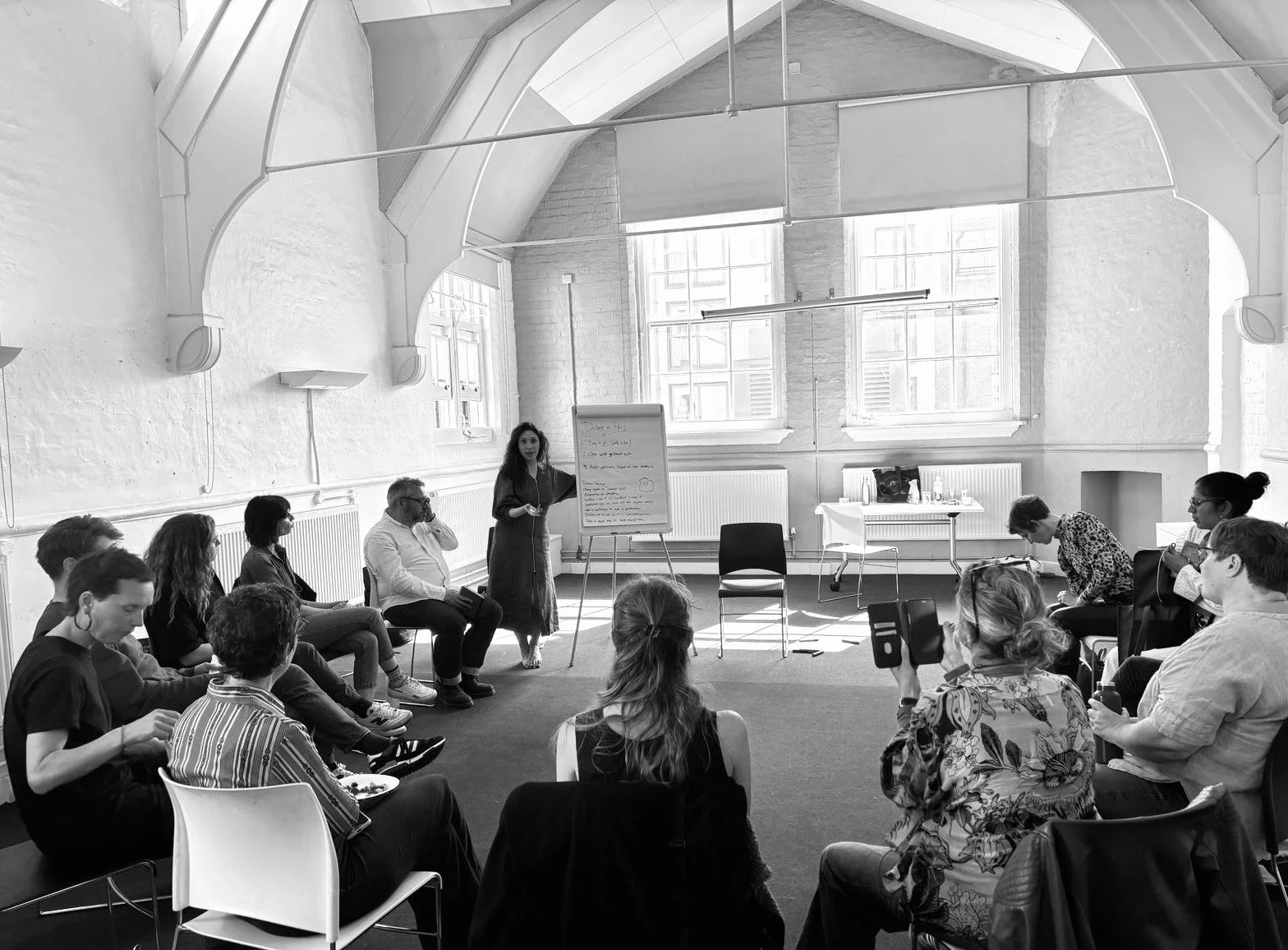
What makes this training different is that it is not delivered to your group - it is developed with them in real time.
Rather than working through pre-set scenarios or case studies, participants bring live topics, real tensions, and current decisions into the room. The method is then practised on what is live and relevant to your organisation or team right now, leaving participants with direct experience of using the tools and making practical decisions and progress.
No two Lewis Deep Democracy trainings or facilitation processes look the same, because no two groups are the same.
What I Offer
Team, leadership, or organisational training in Lewis Deep Democracy as well as bespoke facilitation or team coaching.
Some teams want a training adapted for their context and delivered in a variety of flexible formats.
Others want me alongside them to facilitate or coach a specific team, leadership, or organisational challenge, dynamic, or opportunity.
Whatever your needs are, we will work out the right shape together.
Keep on reading to see what you will learn and gain from experiencing this method…
What you will learn
Collaborative Decision Making
Solve problems and make decisions in participative ways.
Facilitate dynamic conversations which unleash engagement and creativity.
Create safety in large or small groups for difficult conversations to take place.
Surface the wisdom of different views and improve decision making by incorporating this valuable information.
Resolving Conflict and Tension
Successfully navigate disagreement and discomfort without retreating from it, avoiding tough decisions, accommodating or losing clarity.
Appropriately address “elephants in the room.”
Recognise the underlying tensions that block a group's progress, diagnose when group dynamics become polarised and rigid, and know what tools to use in such situations.
Resolve differences of opinions, arguments and conflicts instead of allowing anger and blaming to continue. Learn to unleash the creative potential that lies within every conflict.
Use tension as an opportunity for learning, growth and to improve relationships.
Improve organisational and team culture
Retain valuable people and stop the expensive revolving door of new recruits.
Create an emotionally mature culture where people can skilfully navigate tough moments together with self-awareness and candour, reducing patterns of sickness leave and burnout.
Shift from siloed thinking to holistic collaboration, enabling cross-functional teams to work together effectively.
Develop leaders with finely tuned listening skills who can understand team concerns and take skilful, responsible, and confident action before challenges escalate or derail actions.
Understanding Group Dynamics
Read the dynamics of a group, pick up on the early signs of resistance and emerging conflict and act in a timely manner to reduce tension.
Understand the obstacles to good communication, learn to listen and pay attention to different viewpoints.
Observe group dynamics that exist beyond individuals and manage them for more effective collaboration.
Begin and end meetings with a powerful way to connect the group and get a handle on what is happening in the room.
Developing inner skills
Grow the capacity to hold all views as valuable, including the uncomfortable, unpopular, or dissenting ones.
Stay present with tension, difficulty, and strong emotion without collapsing into fixing, withdrawing, using rank, or avoiding.
Build self-awareness of your own reactions, edges, and assumptions and the ability to work with them rather than be hooked by them.
Develop the inner steadiness that allows you to facilitate, lead, or contribute as a non-polarising presence in charged situations without losing your ground.
Cultivate genuine compassion for the range of views and experiences in yourself and within a group, including those you disagree with.
Taking part in a training or facilitated session(s) will…
Save time, energy, and money. Instead of using these resources to deal with interpersonal dynamics, you can focus on your impact instead.
Strengthen relationships through having relevant and successful conversations where everyone feels heard.
Create peace of mind and stability through cultures of clarity and participation.
Improve performance by unleashing collective agency, insight and accountability.
Build the long term skills and capacity of leaders to enable highly performing, healthy teams.